
Emergency Lighting: What the Law Requires (And Why It Matters)
When a power cut strikes or an emergency breaks out, emergency lighting can be the difference between safe evacuation and chaos. Contrary to popular belief though it is not just best practice, it’s actually a legal requirement in the UK for nearly all commercial and public buildings.
So, what exactly are the rules around emergency lighting, and what does a compliant setup look like? Here’s what you need to know.
Why Emergency Lighting Matters
Whether due to a fire, a power outage or another crisis, emergency lighting is there to help people exit a building quickly and safely when the mains power fails. Without proper lighting, even a familiar building can become a maze of trip hazards and poor visibility. And this situation is amplified when people are trying to navigate it when under stress.
UK regulations require emergency lighting in all non-domestic buildings. It should activate automatically when the normal lighting system fails and stay on long enough to allow people to evacuate or take critical safety actions.
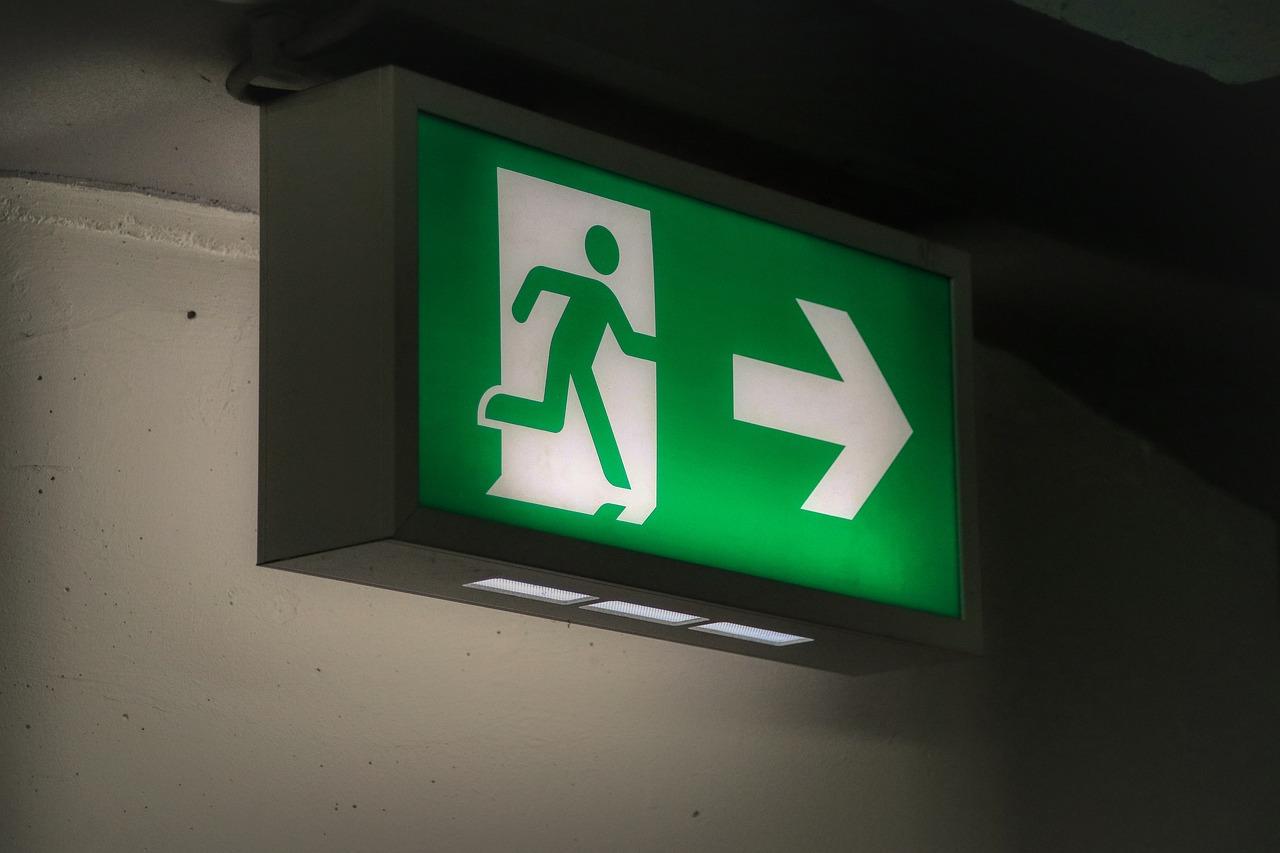
In your fire safety plan, you should have details of both emergency exit signs and luminaires, but what is the difference?
To put it simply, emergency exit signs show the way to safety and must be always illuminated, either internally or externally. Emergency luminaires on the other hand are the light fittings themselves. These may be maintained (on all the time) or non-maintained (only activate during a power failure).
However, both play a vital role and need to be installed strategically around your building.
What Needs to Be Lit?
A compliant emergency lighting system needs to do more than just switch on a few lights. It is there to provide lighting in key areas so people can leave the building safely or take critical safety actions. So, it’s important to consider the following in your emergency lighting plan:
Each exit door – Needs to be clearly illuminated with a dedicated emergency luminaire.
Trip hazards – Think stairs, ramps, and any area where someone might stumble.
Changes in direction – Every turn along an escape route needs to be well-lit.
Escape routes and exits – Including lifts, corridor intersections, and external escape routes.
Stairways – Every flight should receive adequate illumination.
Changes in floor level – Even a small step could be dangerous in low light.
Emergency signs – Directional signs showing the way out must be visible and well-lit.
First aid kits, fire extinguishers, and fire alarm call points – People need to find these quickly.
Power supplies and equipment needing shutdown – In some emergencies, equipment must be safely turned off.
Windowless rooms and toilets over 8m² – These require emergency lighting due to lack of natural light.
Large open areas over 60m² – Even without defined escape routes, these spaces need illumination.
How Bright Should Emergency Lighting Be?
Emergency lighting doesn’t need to be as bright as normal lighting, but it does need to be effective. The minimum requirement is 1 lux. This is roughly the amount of light provided by a single candle one metre away. For comparison, a typical office space is lit to around 500 lux while lifts, corridors and stairs usually get around 100 lux under normal lighting.
While that may not seem too bright compared to what we are used to, it’s important to remember that the goal with emergency lighting is visibility and orientation, not comfort. People only need to be able to see where they’re going and identify obstacles or the necessary signage to find their way out.
Stay Safe in The Dark
Emergency lighting isn’t just about ticking a box on a safety checklist. It’s about protecting lives when things go wrong. Whether you’re managing an office, school, factory, or retail space, taking the time to ensure your emergency lighting is up to code could make all the difference. After all, when an emergency strikes, you want to be confident your lighting won’t leave anyone in the dark.
Don’t wait until it’s too late. If you’re unsure whether your premises are fully compliant, contact our expert team today.