
The Complete Guide to Fire Alarm Categories (And How to Pick the Right One)
When it comes to fire safety, one size definitely doesn’t fit all. Every building has unique risk factors, inhabitants, and layouts, which is why the fire alarm system you install must be the right kind for your premises. Choosing a system that’s mismatched to your needs is a bit like buying a lifejacket for someone who doesn’t swim. It might look good on paper, but it won’t do the job when it matters.
In this post, we’ll walk through the fire alarm grades and categories defined under the BS 5839 standard, explain what each means in practice, and help guide you toward the right choice for your building.
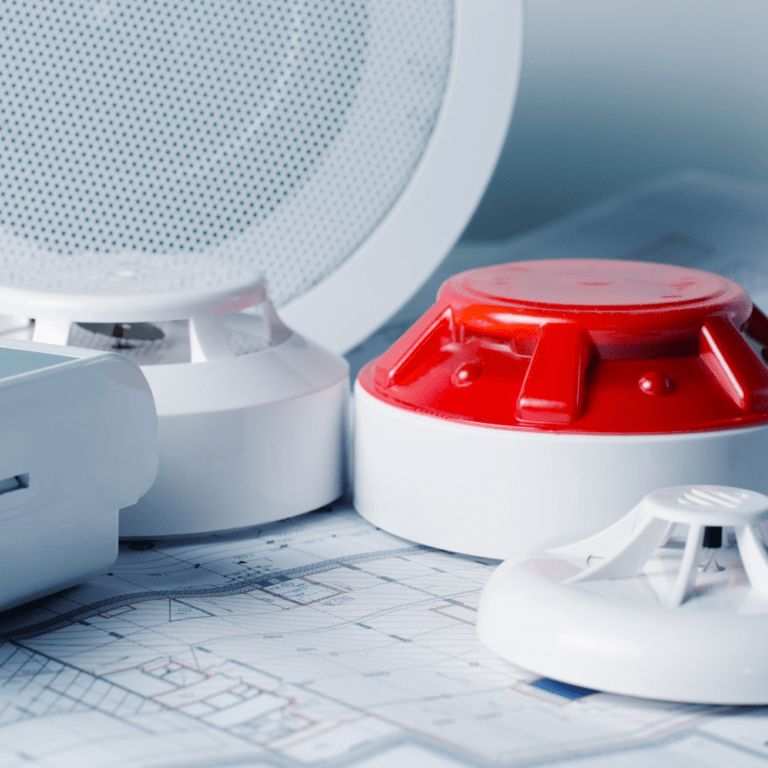
Fire Alarm Grades: A Quick Primer
Before diving into categories, it’s helpful to understand grades. After all, they indicate the quality and sophistication of a fire alarm system:
- Grades range from A (the highest) down to F (the lowest).
- Grade A systems must have a control system compliant with BS 5839 Part 1 or Part 6 — typically seen in more complex or higher-risk buildings.
- For many domestic settings, grades D, E or F are common. These often rely on battery power and, sometimes, a mains connection.
- Grades A to C usually apply in business or commercial settings and may include a mix of detectors, heat sensors, alarms, sounders, and indicating devices.
In short: the grade tells you how capable or robust the system is.
Fire Alarm Categories: What Level of Protection You Get
While “grade” describes system quality, “category” describes how extensive the system’s coverage is — that is, which areas are protected, and how aggressively. BS 5839 divides them into eight categories for commercial buildings and three for domestic (residential) properties.
Below is a breakdown of each:
Commercial / Business Categories (M, L1–L5, P1–P2)
- Category M (Manual system)
The most basic. With this system, there are no automatic detectors. Staff must physically trigger the alarm via a manual call-point in the event of fire. Suitable only for low-risk, small premises. - Category L1 (Maximum life protection, automatic)
This is the most comprehensive life safety system. Detectors are installed throughout every part of the building that might pose a risk, including roof spaces, voids, cupboards (with some small exceptions). The aim is to detect fire at the earliest possible moment to protect life. - Category L2 (Additional life protection, automatic)
Adds detectors in high-risk rooms or areas not covered under L1. For example, rooms that might spark ignition (like kitchens), especially if they lie away from the escape route.
- Category L3 (Standard life protection, automatic)
Ensures that escape routes (stairs, corridors, exit paths) are protected. Unlike L2, it doesn’t require detectors everywhere, just along paths people would use to get out. - Category L4 (Modest life protection, automatic)
Focuses purely on escape routes — hallways, stairwells, corridors — and their circulation areas. Usually acceptable for lower-risk environments where evacuation is fast and simple. - Category L5 (Localised life protection, automatic)
This is more of a specialist overlay rather than a full-system approach. It lets you apply higher sensitivity in specific, high-risk zones (e.g. server rooms, chemical stores) while the rest of the building might follow an L4 or L3 approach. - Category P1 (Maximum property protection, automatic)
Designed primarily to protect business assets, this system aims to detect fire as early as possible across the entire premises, not just for life safety, but to reduce damage and downtime. - Category P2 (Minimum property protection, automatic)
A cost-saving option that places fire and smoke detectors only in high-risk zones, not across the whole building. It provides some protection but with less coverage, which must be weighed carefully.
Domestic / Residential Categories (LD1, LD2, LD3)
For homes, the categories are slightly simplified; the “LD” stands for “Life – Domestic”:
- LD1 (Maximum life protection)
Detectors in all rooms that contribute to escape routes (hallways, landings), plus all rooms that pose a fire risk (except low-risk ones like bathrooms). This gives occupants the earliest possible warning.
- LD2 (Additional life protection)
Fits a middle ground: detectors in escape routes and in certain high-risk rooms (often kitchens, living rooms). Provides more coverage than LD3 without going fully “whole house.” - LD3 (Standard life protection)
The minimum accepted: detectors only in the routes people take to escape (hallways, stairwells, etc.). Paying less in coverage but still offering protection where it matters most.
So, Which System Do You Need?
With so many grades and categories, it’s easy to feel overwhelmed. But the good news is you don’t need to become an expert in fire safety to make the right choice.
The aim is simple: match the system to the specific risks, layout, and use of your building. A care home, for instance, will naturally require a more comprehensive system than a small office, and a domestic property will have vastly different needs from a warehouse full of machinery.
By understanding the level of protection each category offers, you can strike the right balance between safety, compliance, and cost.
Ultimately, the choice will depend on:
- Your fire risk assessment — The more hazards (machinery, heat, chemicals, storage), the more likely you need a higher category.
- Building complexity — Multi-storey buildings, extensive voids, basement zones, and hidden spaces all push you toward more comprehensive systems (L1 or L2).
- Budget constraints — There’s a cost difference as you move “up” categories. Some categories like L5 offer compromise flexibility.
- Purpose — If protecting business-critical assets is important (server rooms, archives, data), you might want P1 in some or all zones.
By matching the fire alarm category to your building’s layout and risk profile, you can balance safety, compliance, and cost.
Don’t Leave It to Chance
Selecting the right fire alarm system isn’t about ticking a compliance box, it’s about making sure your building has the level of protection it truly needs. The right choice depends on your risks, layout, and priorities, whether that’s safeguarding
lives, protecting valuable assets, or both. By matching the system category to your premises, you can avoid overspending on unnecessary coverage while ensuring you’re fully prepared should the worst happen.
Peace of mind starts with the right alarm. Are you protected? Contact us for a no-obligation survey or advice and make sure your fire alarm truly safeguards what matters most.